Large projects often face the challenge of managing numerous people working over extended periods of time. This can lead to various issues, including the mistake of “everyone does everything” or overwhelming amount of internal communications. This approach can result in serious risks, including planners leaving gaps in the project plan by failing to anticipate all […]
Recently, I have grown tired of both Trello with its paid integrations and the manual Kanban process in the wiki table with links to subpages. Then I decided to give an open-source solution a try. I was looking for a system made with PHP, a nice design and a somewhat alive ecosystem. My rather uninformed […]
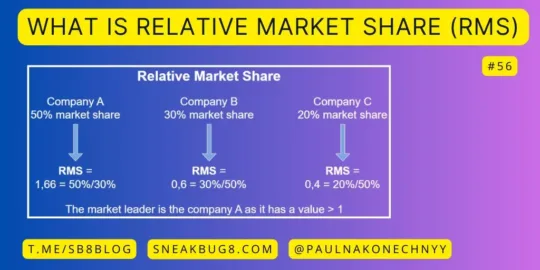
Relative market share is a metric that helps companies identify their position in the market compared to their leading competitor. Relative market share is calculated by dividing the market share of the company under consideration by the market share of its strongest competitor. Relative market share can also be calculated by comparing a company’s sales […]
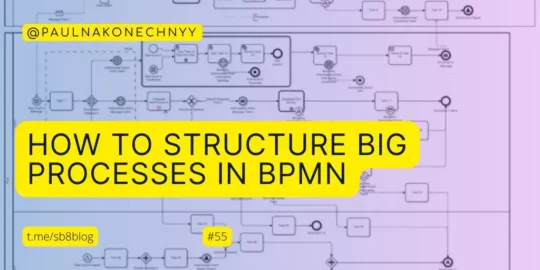
The approach to dealing with complexity has been “Divide et Impera” since the Roman Empire, which means breaking down a complex problem into smaller, more manageable pieces. In BP modelling, if your end-to-end process is too big to deal with, it probably means that you are modelling at a too detailed level. The solution is […]
Working in a primarily English-speaking business environment as a non-native speaker can present significant challenges. As someone who has worked in this type of environment for over two years, I have made major adjustments to my initial tactics and have become a much better Business English communicator. In this article, I will describe some of […]
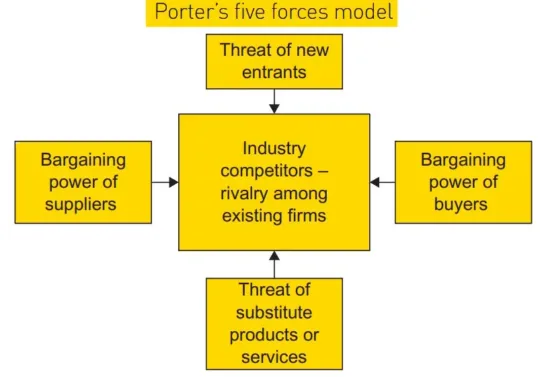
Much of the business analyst’s work is to assess the costs and benefits of delivering a project to the organization. To do that, business analyst has to know a fair bit of strategy analysis. Strategy analysis covers a range of techniques that can be used to understand the business direction and the strengths and weaknesses […]
The balanced scorecard (BSC or BBS) is a strategic planning framework that companies use to assign priority to their products, projects, and services; communicate about their targets; and plan their routine activities. The name “balanced scorecard” comes from the idea of combining strategic, operational, and financial measures to get a more “balanced” view of performance. […]
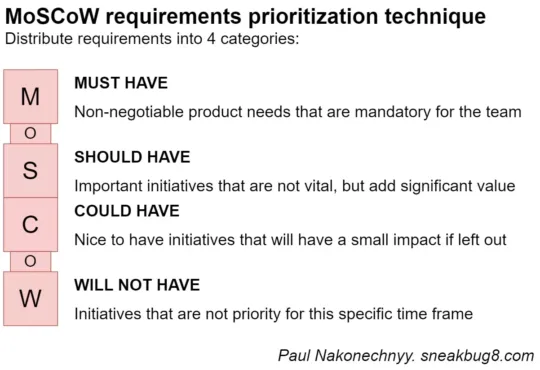
The MoSCoW method is a prioritization technique used in project management to categorize business requirements into four categories: Must have, Should have, Could have, and Won’t have. This allows business to prioritize which project requirements provide the best return on investment (ROI). 1. Must have: These are the essential requirements that are critical for the […]
Have you ever started writing a Requirements document for your next Software project that has turned into a mess as you’ve been pouring more and more information there? I certainly did. Hopefully, there’s are clear solutions to this problem. First one, I’d say is having a clear document structure. But that’s clearly not enough if […]
Conflation of Requirement Types https://youtu.be/CtRRVHUWdE4 Business analysts often confuse different requirement levels and types. One challenge is understanding the classification of requirements, while another is grasping the fundamental types. Business analysts often mistakenly use terms like “system requirements” and “user requirements” interchangeably, when in fact they refer to elements at different levels of abstraction. System […]
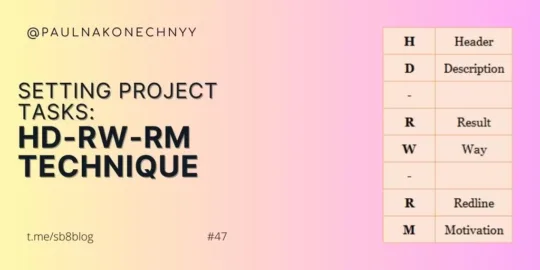
In the name of the HD-RW-RM method, capital letters correspond to the first letters of the names of the blocks, and the hyphen serves to remember the rhyme (sang to himself: “h di – ar double u – ar em”). Structure H – Header The title of the task, beginning with a verb, indicating the […]
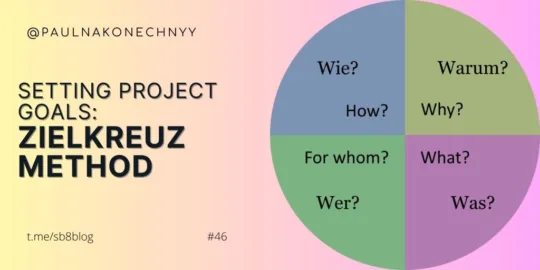
In English-speaking world we are used to hear SMART when talking about goals. However, German has an alternative – Zielkreuz, translated as Target Cross. In order to formulate overarching goals or sub-goals of a development project and to set milestones and indicators, it is also advisable to work with the crosshairs. It is particularly good […]
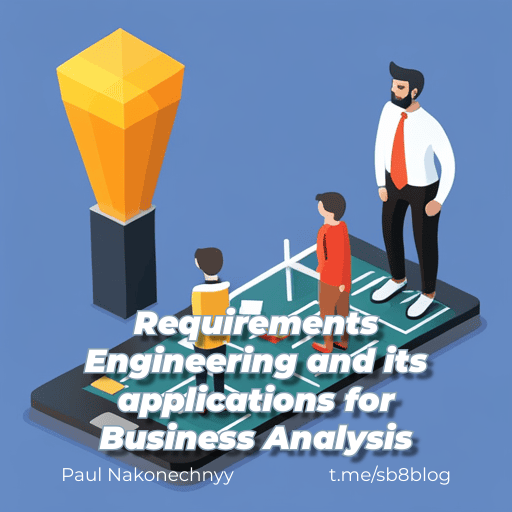
Requirement engineering is a systematic and disciplined approach to the specification and management of requirements with the following goals: Knowing the relevant requirements, achieving a consensus among the stakeholders about these requirements, documenting them according to given standards and managing them systematically. Understanding and documenting the stakeholders’ desire and needs, they specifying and managing requirements […]
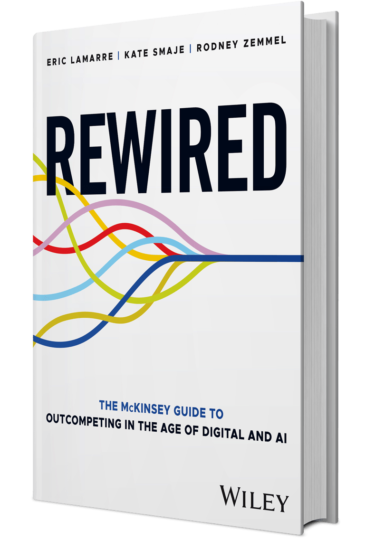
On June 20, McKinsey has released a new book. It was written by Eric Lamarr, Kate Smayer and Rodney W. Semmel. Annotation: Most companies have started a digital and AI transformation, but very few have done the fundamental organizational rewiring needed to build the capabilities to drive continuous innovation across the enterprise. After analyzing the […]
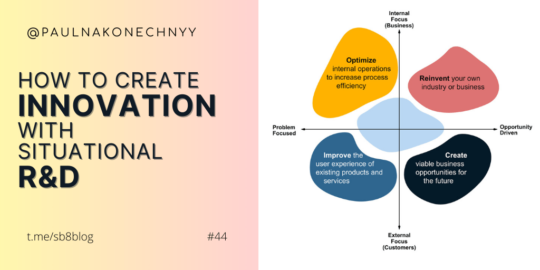
Research and Development process is s a central part of how companies generate revenue and how they get better over time. RnD is just thinking about how you can develop more ideas or more products and services that serve the needs of users or customers in a better and more fulfilling way. Research and Development […]
Article is based on the 2014 interview with now President of the World Bank Ajay Banga conducted by Stanford Graduate School of Business. Here are some potential reasons why someone might choose to work in an international company: Competitive salaries and benefits. International companies often offer competitive salaries and benefits packages to attract top talent. “When […]
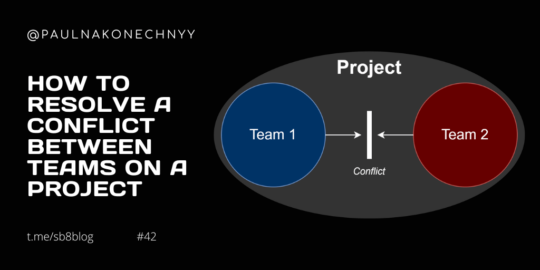
Projects typically involve multiple parties coming together to form a temporary project organization that manages project execution. Let’s imagine a situation where two teams forming the project team experience friction in practice. Thus, the question is: how can project partners manage the integration of work ethics, practices, and processes to produce the most effective and […]
To answer the question “what is Organizational Project Management”, let’s read a fragment of the recent work “Company ‘As Is – To Be’: how Project Management theory can be used to improve and streamline processes in a real case study” by Micol Abello: The OPM is a ‘strategy execution framework to align portfolio, program, and […]
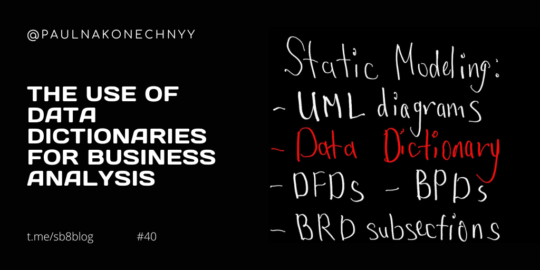
What Is a Data Dictionary? Data Dictionary – a collection of names, definitions, and attributes about data elements that are being used or captured in a database, information system, or part of a research project. A data dictionary is used to catalog and communicate the structure and content of data and provides meaningful descriptions for […]
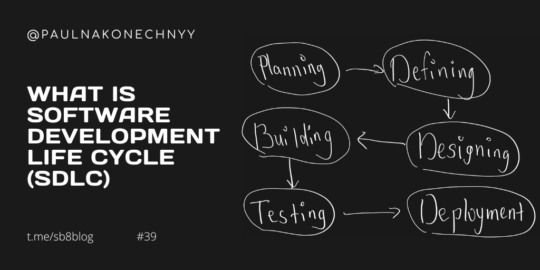
Software Development Life Cycle (SDLC) is the cost-effective and time-efficient process that development teams use to design and build high-quality software. The SDLC aims to produce software that meets or exceeds customer expectations, reaches completion within times and cost estimates, and poses minimal risk. ISO/IEC 12207 is an international standard for software life-cycle processes. It […]