
Bureaucracy

Last updated on December 1st 2025
Province control is a measure of bureaucratic control over the province that determines tax collection rate and crime fighting effiiency for the province. Province control spreads from capital and local administrations. Its spread is impacted by transport infrastructure and geographic features, including rivers and terrain movement maluses.
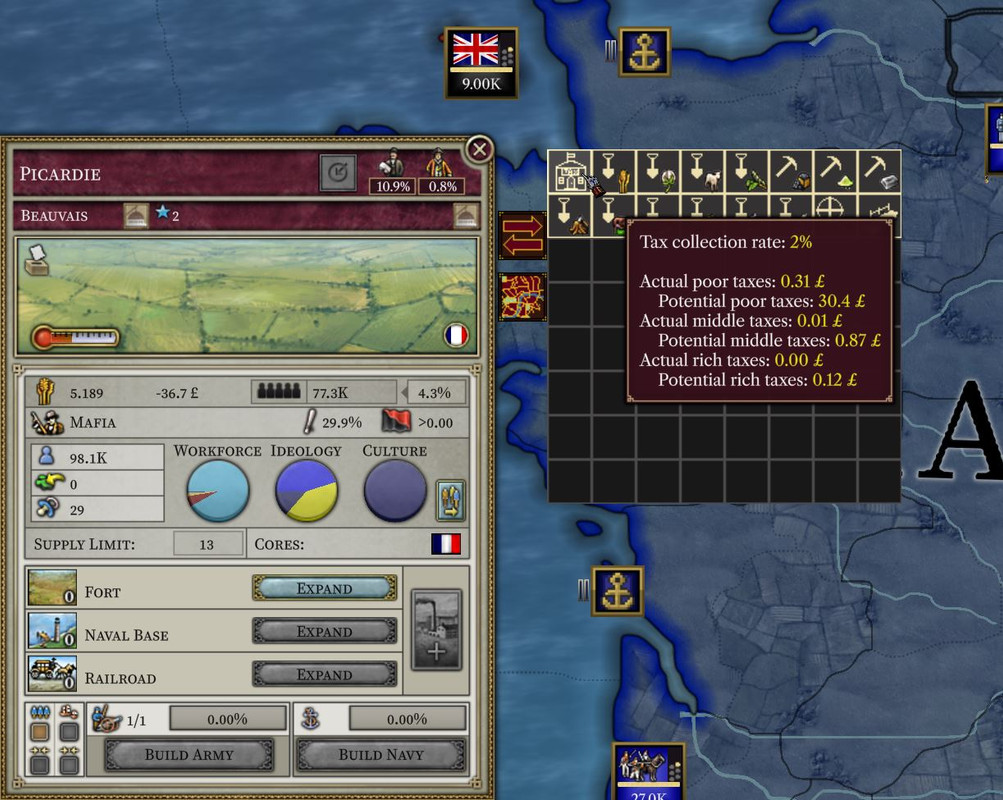
Tax Collection. Tax collection is the primary revenue source of the national Budget. The State need to hire bureaucrats in capital and local administrations to tax population effectively. Tax collection capacity determines the collection rate per administration employee on province level by summing labor prices for different education levels and considers the tax rates for poor, middle, and rich income groups as effort. Ultimately, it combines these elements—global collection potential, administrative and tax efficiency, collection rates, and effort—into a formula that yields the province's tax collection capacity, adjusted by a multiplier and base tax collection figure. Administrative control is the measure of tax collection in % which can be seen in bureaucratic map mode. Detailed tax information can be seen in Province Tiles UI (below).
Administrative spending. As a result of dynamic salaries and competition of employeers for employees (see Employment), cost of administration varies. This makes Bureaucracy one of the biggest Budget expenditures. For administration of the country two types of administrative offices are estblished:
- Capital administration. Every country always has an administration in its capital that manages the country. Total population of the nation generates administrative burden for the Capital administration. Capital administration can hire only accepted pops with high education. Capital administration cost (visible on the budget screen) is
employed educated bureaucrats of accepted culture in the capital * their wage. Capital administration propagates control in provinces around the administration that establishes tax collection effectiveness and crime fighting.
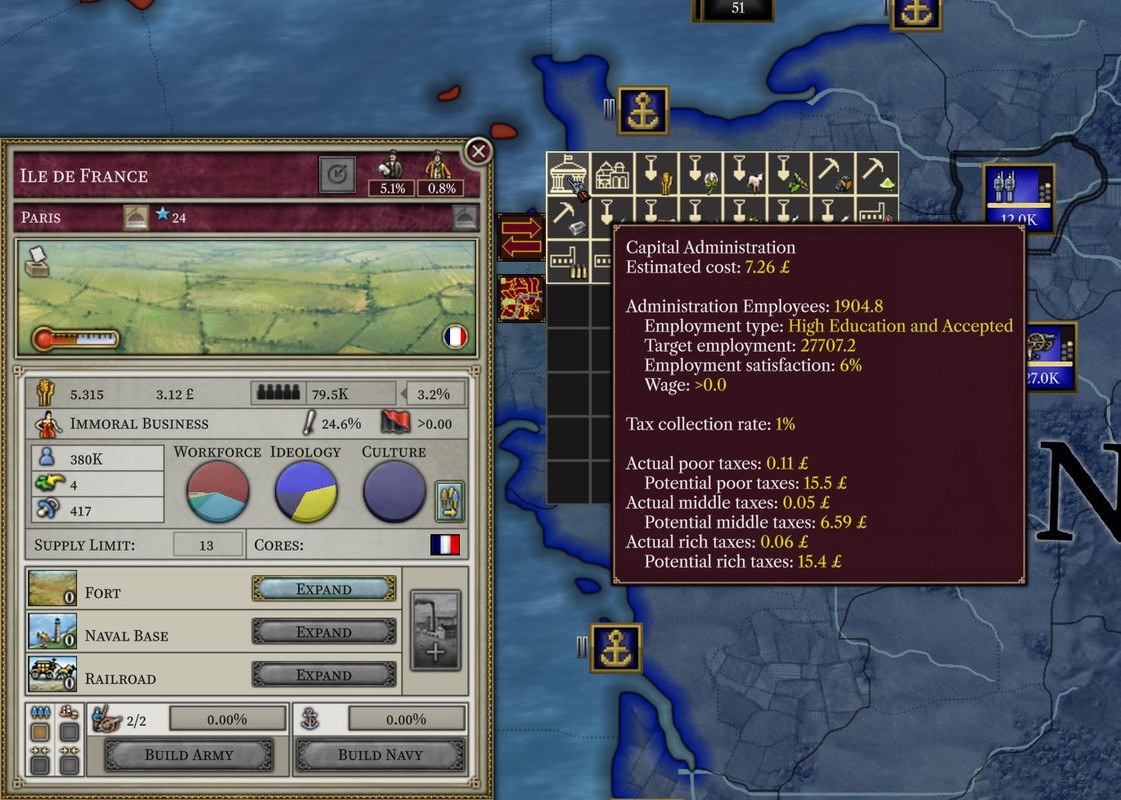
- Local administrations are established by the player. Local administrations are 50% less efficient per bureaucrat than the capital one. Local administrations hire accepted and non-accepted pops with high education. Local administrations propagate control in provinces around the administration that establishes tax collection effectiveness and crime fighting.
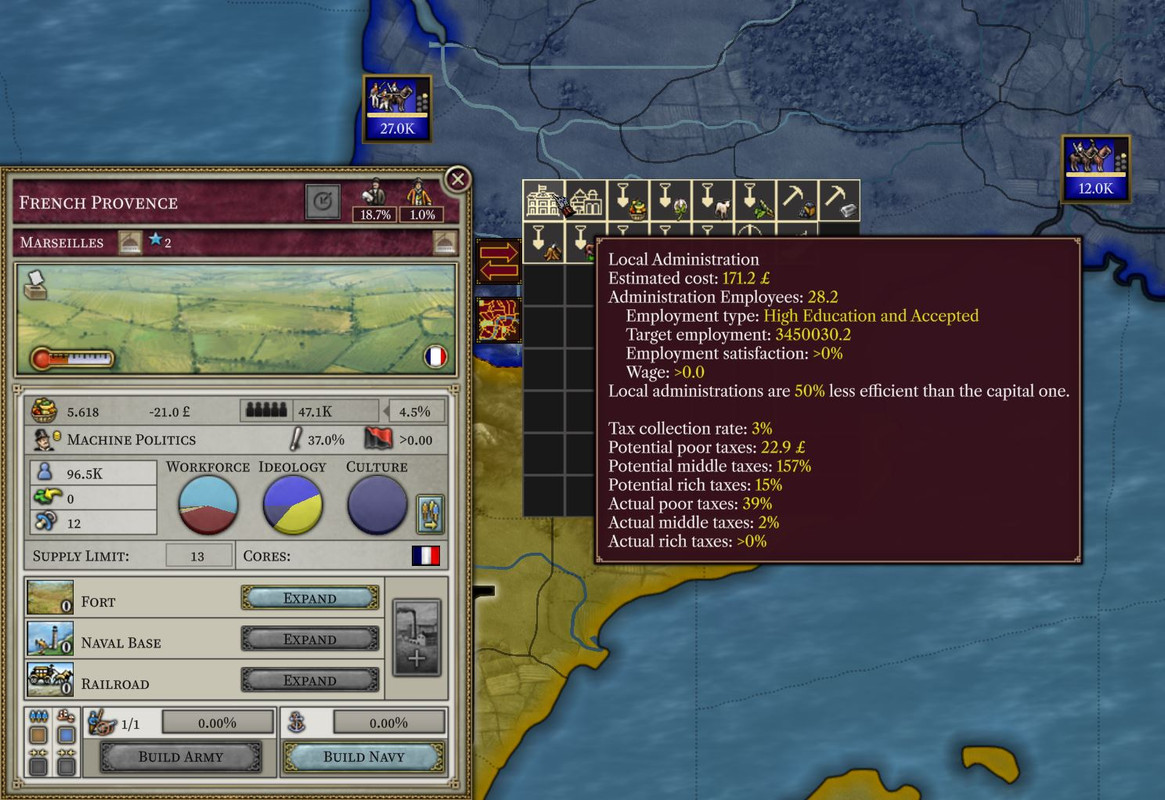
Local tax collection resulting from local Control is visualized with a tax collector office in each province.
Government slider sets the target amount of bureaucracy nation wants to buy in every administration. It assumes that one public worker can produce N * (admin-efficiency-modifier) administration. The state then tries to pay for this amount of labor with a given budget. Therefore, every state has different bureaucrat salaries you can find on demography window.
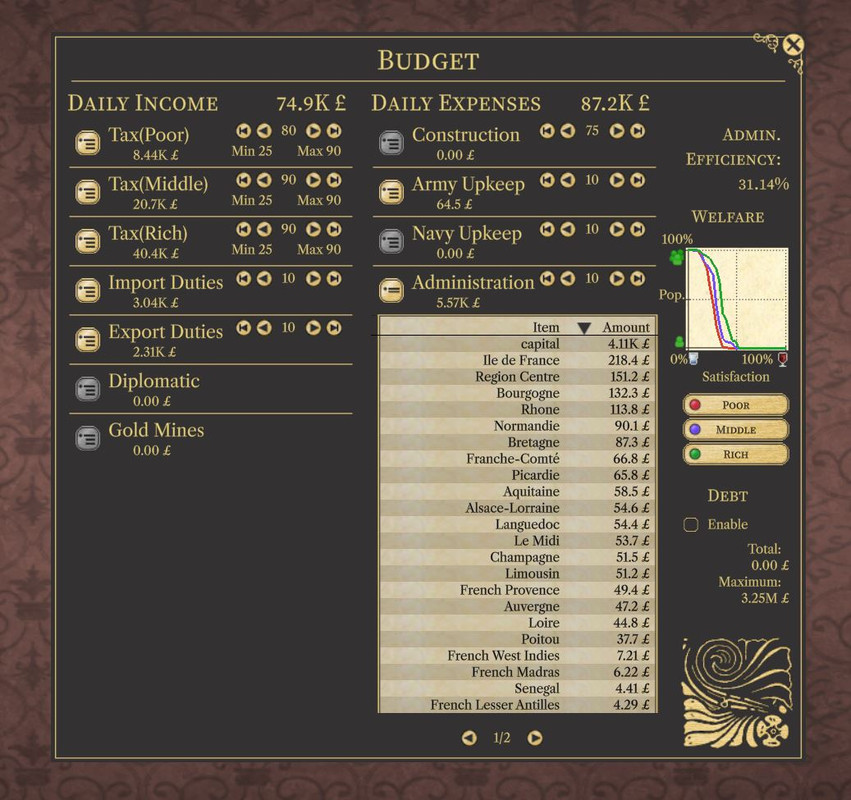
Problem: I moved the capital and now capital administrative expenses are too high. Does the new capital have enough well-educated pops of accepted culture to fill the need of imperial administration? When you set the slider high, you find people to work in your admin relatively quickly but you pay a higher price. When you set the slider low, you might not employ all required administrators, but you keep their wage in check. It could be that you moved capital in industrial zone where educated workers are paid good wages and you have to compete with them. More likely, your 100% spendings on admin heavily distorted local wages.