Employment
Last updated on December 1st 2025
Wages for bureaucracy, education, factories and RGO workers are determined by market competition as employers compete with one another for employees offering them competitive wages. Labour market is calculated on province level.
Pops are distributed into 5 pools of labour:
- No education: labourers, farmers and slaves;
- Basic Education: craftsmen;
- Guild education: artisans;
- High education: clerks, clergy and bureaucrats;
- High education and accepted: clerks, clergy and bureaucrats of accepted culture
As a result, these pop types compete for employment while employers compete for employees as:
- No education pops work in factories (with an 80% debuff), RGOs or subsistence.
- Basic education pops may work in factories (w/o debuffs).
- High education pops may work in education, administration, or factories. High education pops increase efficiency of every other worker in the factory by 200%.
- Guild education pops may only work as artisans.
Pops (with education other than guild education) can downshift to jobs with lower education requirements. Thus, for example, craftsmen may work in farms. Guilds ban artisans from working on other jobs. As industries expand, artisans will convert into other pop types.
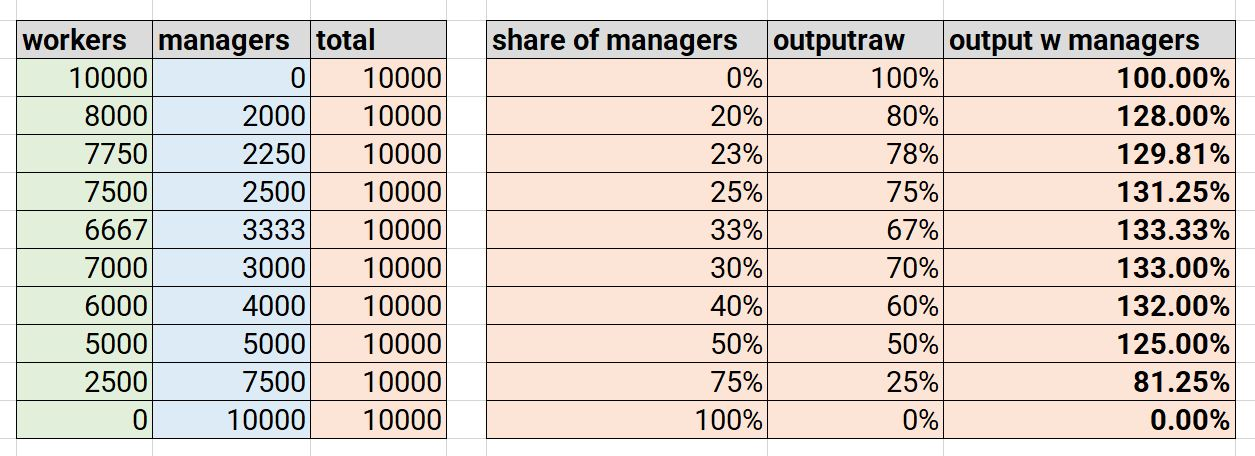
Theorycrafting
Managers (high education pops) in factories don't produce anything. However, since they increase the throughput of other workers in the factory by 200%, we can calculate a proportion. With that, the optimal number of managers in a factory with full employment that has no "no education" workers, is 33.3%. This proportion of craftsmen to clerks can be used as an important benchmark for optimizing the economy of your nation.